
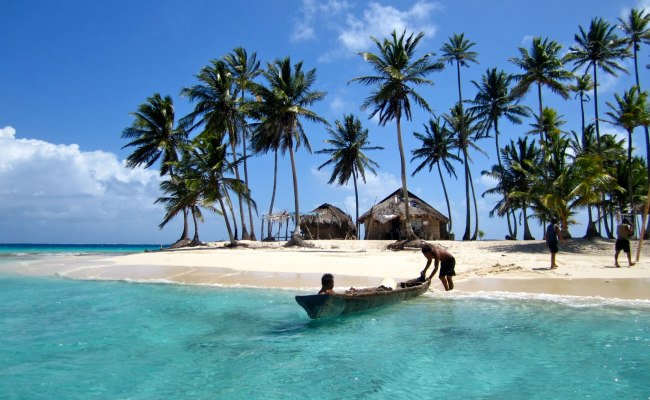
The correct pronunciation of the ethnic group known as Guna is actually Kuna, despite being written as Guna. It is unclear when this group first arrived in Panama, but modern theories suggest they may have migrated from South America, while others contradictorily suggest they came from the Caribbean Lesser Antilles. By the 16th century, the Kuna people had already settled on the 365 islands currently known as the San Blas Archipelago, or “Guna Yala” in their native tongue. They were pushed towards the Caribbean coast from the mainland by hostile Native American tribes and Spanish conquistadors. Today, the majority of Kuna people are located on the San Blas islands, but some can also be found in the Chucunaque and Bayano jungles.
The Kuna people have struggled for centuries to preserve their culture and traditions. During the colonial period, they allied themselves with European corsairs and pirates, successfully attacking the Spanish who aimed to eliminate them. As the Spanish empire declined, the Kuna became established in the regions of present-day Darién and San Blas in Panama, as well as western Colombia, where they were granted land and legal recognition in the late 19th century. However, Panama, then a Colombian province, declared independence in 1903, ignoring the agreements. Despite the majority of the Kuna people being on the Panamanian side of the border, many inhabitants of San Blas sided with the Colombian government, as Panamanian authorities sought to “civilize” the Kuna.
The Guna Revolution
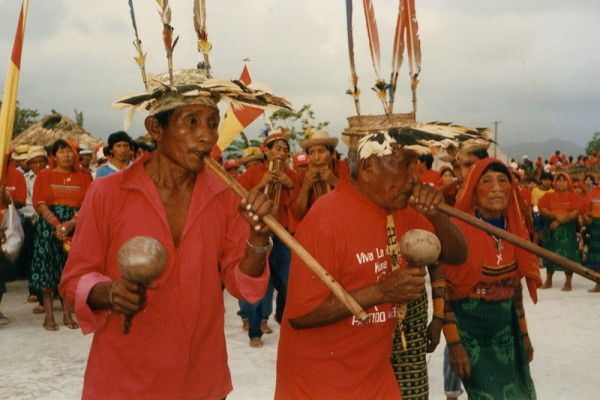
Tensions peaked in 1925 during the so-called “Guna Revolution,” when Canadian adventurer Richard O. Marsh encouraged the Kuna people to declare independence from Panama and create the “Republic of Tule.” A peace treaty was later signed, and the Kuna agreed to recognize Panamanian sovereignty only if they were granted a good deal of autonomy. Today, the Panamanian authorities rarely interfere with the Kuna government, and have established three special “comarcas” for the Kuna people. The Kuna have developed the most advanced political system of any indigenous group in Latin America.
The Mola

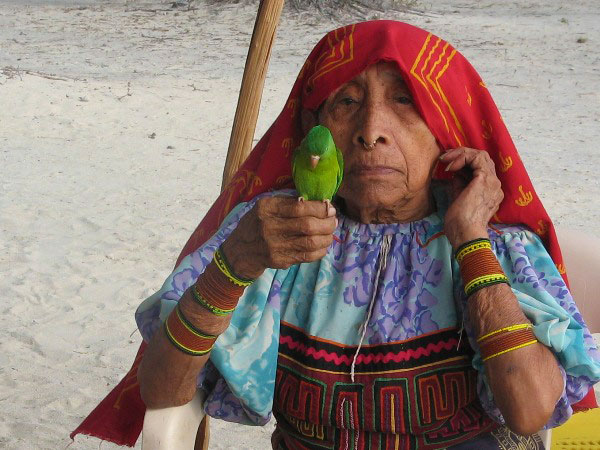
Kuna women are known for wearing hand-sewn skirts and blouses, called “molas,” which are intricate patterns made of layers of fabric in a reverse applied technique. Kuna men typically wear a traditional shirt and pants, which can include western-style jeans or shorts. Kuna women also paint their faces with a homemade blush made from achiote seeds, and often wear a nose ring and paint a line on their nose.